Please enter the code we just sent to whatsapp 91-11-46710500 to proceed
Didn't Receive OTP?
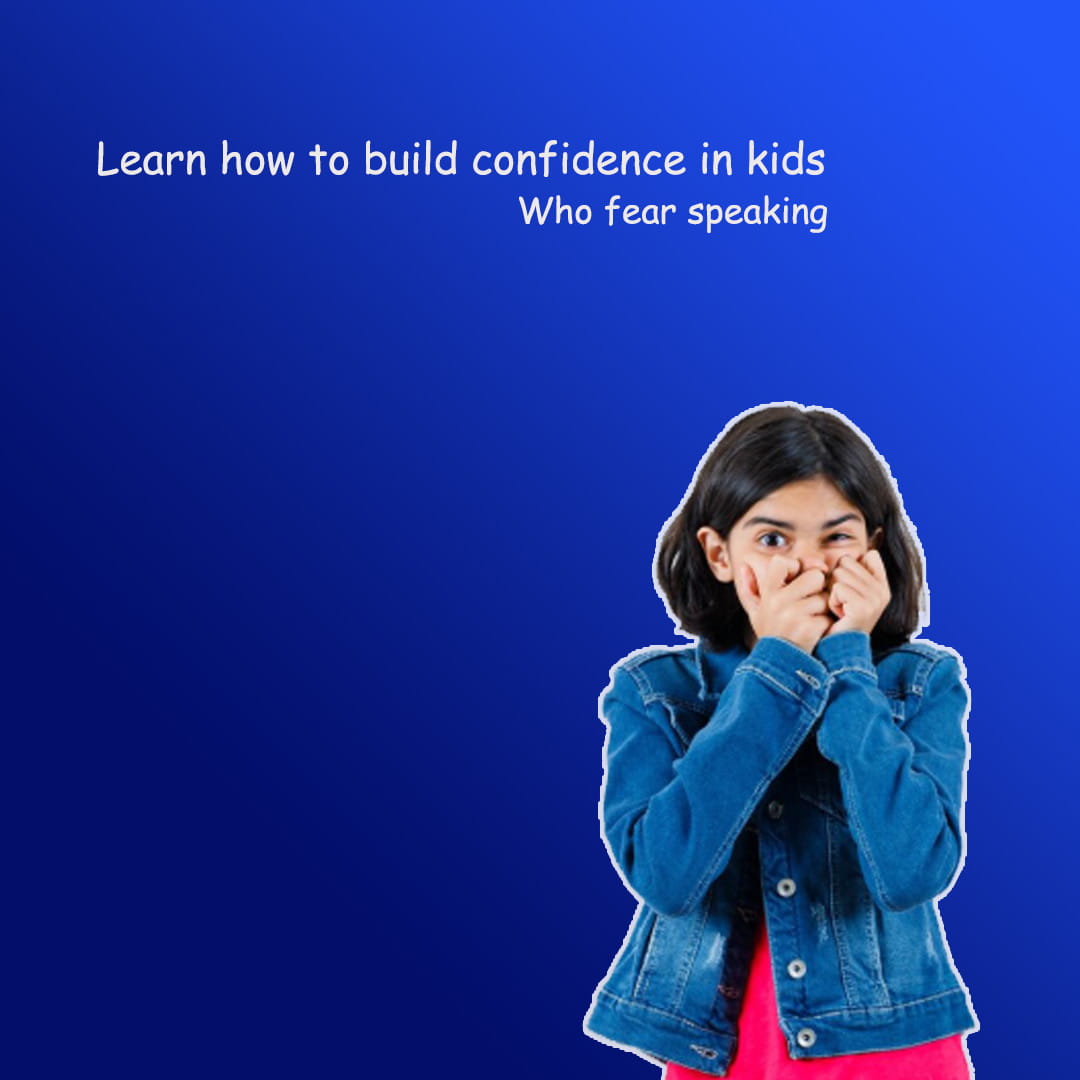
Easy tips for parents to help kids overcome fear of speaking and build confidence effortlessly.
Confidence is not something that children are born with; it is something that they develop over time through experiences, support, and emotional nurturing. For many parents, one of the most daunting issues to deal with is a child who is afraid to speak. This could be anything from refusing to answer questions in the classroom, struggling to communicate with adults, or freezing in front of the class when it’s their turn to speak.
The good news is that confidence in kids who fear speaking can be developed effortlessly. With the right support and simple daily routines, parents can help their children feel safe, heard, and able to express themselves.
This article will examine why kids fear speaking and provide easy tips for parents to help kids build confidence when speaking.
Understanding Why a Child Is Afraid to Speak
Before attempting to “fix” the issue, it is essential to understand it.
A child who is afraid to speak is not lazy, rude, or disobedient. In fact, in most instances, the fear is a result of one or more of the following:
1. Fear of Judgment or Making Mistakes
Children fear being laughed at, corrected, or judged for saying the wrong thing. Even one instance of being mocked in class can have a profound effect on their desire to speak again.
2. Perfectionism
Some children believe that everything they say must be “perfect.” If they cannot think of the perfect thing to say right away, they will remain silent.
3. Past Interruptions or Dismissal
Children who are frequently interrupted or told to “be quiet” may learn that their voice does not count.
4. Personality and Temperament
Introverted children or those who are sensitive may require more time and emotional support before speaking up. This is not a problem; it is simply a matter of personality.
Why Speaking Confidence in Kids Matters
Having a fear of speaking can affect communication, but it also affects development.
Kids who have a lack of speaking confidence can:
Avoid participating in class
Have difficulty making friends
Underrate their capabilities
Feel anxious about school or social situations
However, kids with speaking confidence can:
Communicate their ideas effectively
Seek assistance when needed
Enhance their leadership skills
Have high self-esteem
Developing confidence in kids can be very beneficial throughout their lives.
Practical Ways to Build Confidence in Kids Who Fear Speaking
1. Establish a Safe Speaking Environment at Home
Home should be the first place where children feel safe to speak.
Encourage your child to finish speaking without interrupting
Make eye contact and show interest
Don’t point out grammar or pronunciation errors in the middle of a sentence
When children feel heard, they gradually realize that their words matter. This is the key to confidence-building in kids who fear speaking.
2. Normalize Mistakes as Part of Learning
Children are often reluctant to speak because they’re afraid of making mistakes.
Parents can shift this thinking by:
Talking about their own mistakes in front of their kids
Gently laughing at small mistakes
Saying things like, “It’s okay to try, even if it’s not perfect.”
When mistakes are normalized, kids become more comfortable speaking.
3. Encourage, Don’t Force
Forcing a shy child to talk, especially in front of other people, can be counterproductive.
Instead of saying: “Say it loudly!”
Try: “Would you like to try saying one line?”
Small steps are much more effective than forcing the child. Letting the child go at his own pace helps build trust and speaking confidence in kids.
4. Practice Speaking Through Play
Play is one of the most effective methods for children.
Activities to try include:
Role-playing as teacher and student
Mock interviews
Storytelling games
Puppet talk
When speaking becomes play, fear will decrease on its own. This is particularly helpful for a child who is afraid to speak, as it takes the pressure off of performance.
5. Praise Effort, Not Just Outcomes
Rather than praising children for speaking well, praise them for trying.
Use phrases such as:
“I am proud of you for trying.”
“You were nervous, but you spoke anyway. That takes courage!”
This reinforces confidence and motivates children to keep practicing.
6. Don’t Compare Your Child with Other Kids
Saying things like: “Your sister talks so confidently” or “Why can’t you talk like him?” can hurt self-esteem and make your child more fearful. Each child is different when it comes to building confidence. Compare your child’s growth, not their skills.
7. Expand Your Child’s Vocabulary
Fear can also come from a lack of words to say. To overcome this, you can:
Read with your child every day
Talk about the stories and characters
Ask open-ended questions
A child with a good vocabulary has the power to communicate effectively, and this will boost speaking confidence in kids.
8. Start with Emotional Expression
Some children have trouble speaking because they have trouble with emotions. Teach them to label emotions:
“You look nervous.”
“Are you feeling shy or scared?”
When children learn to express emotions, communication becomes easier.
9. Focus on Small Victories
Confidence doesn’t happen overnight. Celebrate successes such as:
Answering one question in class
Talking to someone new
Telling a short story
Small victories help to reinforce progress and create confidence.
When Extra Support Helps
In some cases, even when the environment is loving, a child who is afraid to talk may need some structured support. This is where communication programs become very important, particularly those that are specifically geared towards children.
How the Bambinos Program Helps Kids Build Speaking Confidence
The Bambinos program is developed to help kids overcome speaking fear in a gentle and confidence-building manner.Instead of pushing kids to perform, the Bambinos program relies on:
Providing a safe and non-judgmental environment
Using interactive methods to express themselves
Building confidence gradually
Helping kids enjoy speaking rather than fear it
The program recognizes that kids who fear speaking develop confidence when learning becomes a fun, supportive, and stress-free experience. For parents seeking to build speaking confidence in kids without stress and comparison, the Bambinos program provides a structured yet supportive setting where kids can discover their voice effortlessly.
Shape Your Kid's Future with Bambinos Classes | Bambinos.live India's No. 1 English Communication Platform For Kids | Click here to Book a Free Class Limited time offer.

Ayushi Gupta is an English educator at Bambinos.live, where she brings stories, grammar, and language to life for young learners in fun and meaningful ways. Deeply passionate about English and kids, Ayushi believes that learning should feel joyful and empowering. While her teaching focus is English, she also holds a keen personal interest in Mathematics, which she enjoys exploring to better understand how children think and learn across subjects.














 Unbox English
 Sanatan Unboxed
 Gita for kids
 Alpha Math